

Full-Grain vs. Top-Grain Leather: The Honest Metrics You Need to Know Before You Buy
You're spending real money on a leather jacket. So before you click buy, you deserve to know exactly what kind of leather is actually inside — and why the difference matters more than most brands want to admit.
Browse any store or scroll any site and you'll see the phrase genuine leather everywhere. Sounds premium, right? Here's the uncomfortable truth — genuine leather is actually one of the lowest grades on the quality scale. It's a bit like calling a car a real vehicle without telling you whether it's a brand-new SUV or a 20-year-old rust bucket.
The two grades that actually matter when buying a real leather jacket are Full-Grain and Top-Grain. Both are genuine leather. Both look great on day one. But they behave very differently as years pass — and knowing which one you're buying is the difference between a jacket that lasts a lifetime and one that starts peeling after two winters.
What Exactly Is Full-Grain Leather?
Full-grain leather comes from the very outermost surface of the animal hide and nothing is sanded, buffed, or corrected. Every natural mark, every subtle texture variation, every faint blemish — it's all preserved. That might sound like a flaw, but it's actually the point.
Think of it like an unedited photograph. There's real character in it. The natural grain on the surface is incredibly tight and dense, which is what makes full-grain leather so durable and naturally moisture-resistant. Over months and years of wear, it develops what leatherworkers call a patina — a deepened, richened tone that tells the story of your life in it. No two jackets age the same way.
Left: Full-grain leather — natural open pores, zero coating. Right: Top-grain leather — pores sealed by a pigment finish layer. The difference you can't always see but always feel over time.
Full-grain leather is the same grade used in high-end luggage, fine saddles, and quality watchbands — anything designed to survive decades of daily use.
What Is Top-Grain Leather?
Top-grain leather also comes from the top layer of the hide — but the surface is lightly sanded or buffed to remove any natural imperfections. A finishing coat is then applied — usually a thin layer of pigment or a protective spray — giving it a perfectly smooth, uniform look.
The result? It looks absolutely flawless straight out of the box. Super clean, consistent colour, silky to the touch. It's the grade you'll find in most fashion brand jackets because it photographs beautifully and feels immediately luxurious.
The trade-off is that the sanding removes part of the tight natural grain layer — the very thing that gives leather its strength and breathability. Top-grain is still high quality, but the extra processing changes how it performs long-term. Over time, the surface finish can crack or peel if not conditioned properly, and it won't develop the same rich patina that full-grain is famous for. If you're choosing between our men's leather jackets or women's leather jackets, this distinction is worth understanding before you buy.
Head-to-Head Metrics at a Glance
Here's a quick visual score of how each type stacks up across the metrics that matter most when you're investing in a leather jacket:
Full-Grain
Top-Grain
The Full Comparison Table
Let's break it down metric by metric — the table most leather brands don't put front and centre, because it makes the differences impossible to ignore.
| Metric | Full-Grain | Top-Grain |
|---|---|---|
| Where it comes from | Outermost layer — completely untouched | Top layer — lightly sanded & finished |
| Natural grain | 100% intact — every natural mark preserved | Removed or reduced through buffing |
| Surface finish | Minimal or no coating — raw natural surface | Pigmented or lacquered coating applied |
| Durability | 20–30+ years with basic care | 5–15 years; finish may crack before leather |
| Breathability | Excellent — natural pores remain fully open | Reduced — coating partially seals pores |
| Break-in period | Moderate — weeks to a couple of months | Short — comfortable almost from day one |
| Aging & patina | Develops beautiful character over years | Fades or cracks; limited patina development |
| Moisture resistance | High — tight grain repels water naturally | Moderate — depends on surface coating |
| Scratch behaviour | Scratches blend in and add to the story | Scratches show more visibly on the finish |
| Appearance uniformity | Natural variation between panels | Very consistent colour & texture throughout |
| Relative price | Higher — premium material, harder to source | Lower to mid — more commonly produced |
| Best suited for | Long-term investment, everyday wear hero | Fashion-forward looks, trend pieces, gifting |
How to Tell the Difference When You're Shopping
Most brands won't label their leather grade clearly. Here's what to look — and feel — for before you buy:
1. Read the product description closely
If a brand says genuine leather without specifying full-grain or top-grain, assume it's been processed. Brands that use full-grain leather are usually proud to say so — because it's genuinely better material and costs more to source. You'll see it called out explicitly, the way Decrum does across every style in our leather jackets collection.
2. Check if the surface looks too perfect
Full-grain leather has subtle natural variation — tiny marks, slight texture differences between panels. If a jacket looks machine-perfect and identical across every inch, it's almost certainly top-grain with a heavy coating on top.
3. Try the water drop test
Place a single small drop of water on the surface. Full-grain leather slowly absorbs it through the open natural pores. Top-grain leather with a heavy finish lets the water bead up and roll off — because those pores are sealed.
The water-drop test: full-grain leather absorbs the drop through its open natural pores (left), while top-grain leather's sealed coating causes the droplet to bead and roll off (right).
4. Trust your nose
Real full-grain leather has a rich, deep, slightly earthy smell. Top-grain leather often smells more of dye or chemicals — especially on newer pieces. Not a perfect test on its own, but a useful signal when combined with the others.
Where Does Lambskin Fit Into All This?
Here's where Decrum does things a little differently. All our jackets are built on full-grain nappa lambskin — which combines two great things into one exceptional material.
Lambskin is the hide from young sheep. It's naturally finer, thinner, and softer than cowhide — it drapes beautifully and has a silky hand feel that cowhide rarely matches. When you take that already exceptional skin and keep the full-grain surface completely intact — no sanding, no buffing, no heavy coating — you get leather that is soft and durable, lightweight and long-lasting.
Every Decrum hide is drum-dyed at 0.6–0.8mm thickness, meaning colour penetrates all the way through the leather fibres, not just sitting on the surface. Even as the jacket ages and wears naturally, the colour stays deep and consistent. This is why our jackets are worn and loved by over 50,000 customers worldwide. Whether you're shopping our men's collection, our women's collection, or looking for something specific like a biker leather jacket, every piece starts with the same uncompromised hide.
Every Decrum jacket is crafted from 100% genuine full-grain lambskin leather. No faux, no PU, no bonded leather, no vegan alternatives — just the real thing, handled with care from hide to hanger.
Shop Full-Grain Lambskin
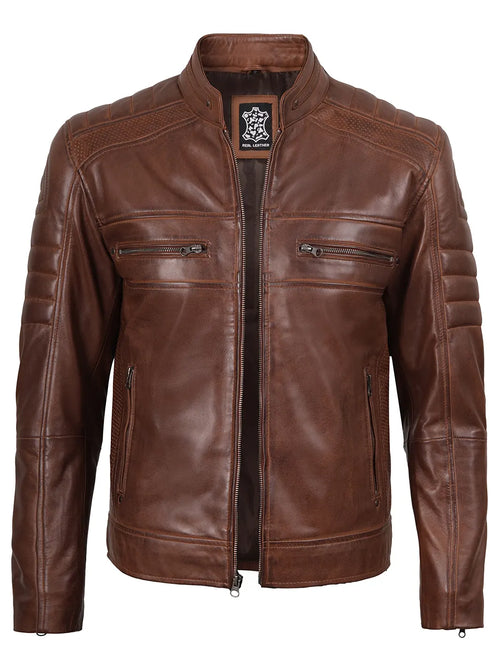
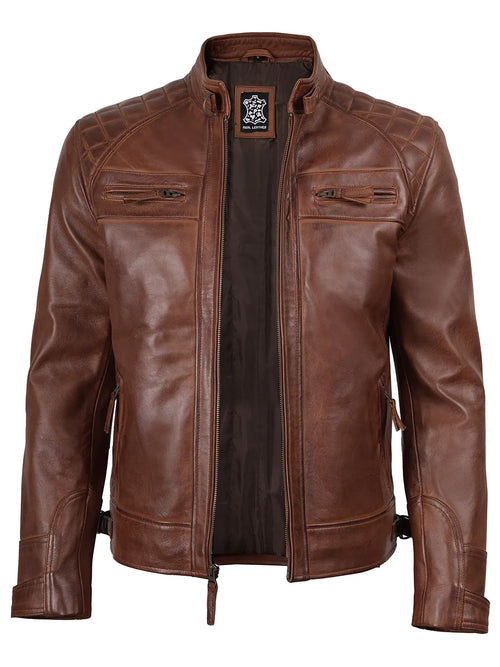
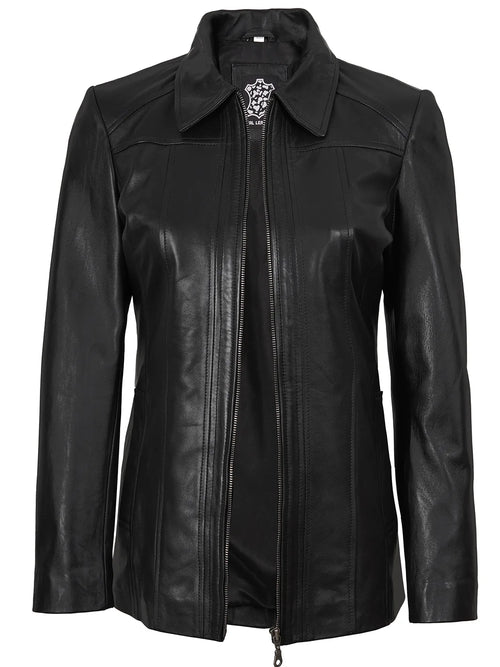
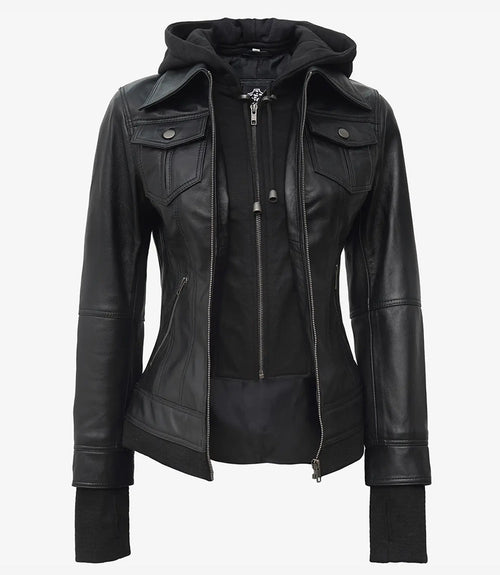
Jackets Built to Last — Crafted from Full-Grain Leather
Caring for Full-Grain vs. Top-Grain: What Changes?
Neither type is particularly high-maintenance — but they do need slightly different care to stay at their best. For a full breakdown, check out Decrum's care and sizing guide.
For full-grain leather, the key is conditioning. Because the surface is natural and uncoated, it can dry out — especially in hot, dry climates. Apply a quality leather conditioner every 4–6 months to keep the hide supple and fed from the inside out.
For top-grain leather, focus on protecting the surface coating. A leather protector spray maintains the finish; once that cracks, the leather underneath is more vulnerable. Avoid heat sources and always air-dry naturally after rain — never near a radiator.
Both types should be stored on a padded hanger in a breathable garment bag — never folded, never in plastic. Treat your jacket right and either type will outlast fast-fashion alternatives by a decade or more. Browse our best-selling jackets to find one worth the commitment.
Frequently Asked Questions


